What Is Branded Content? Complete Guide for 2024
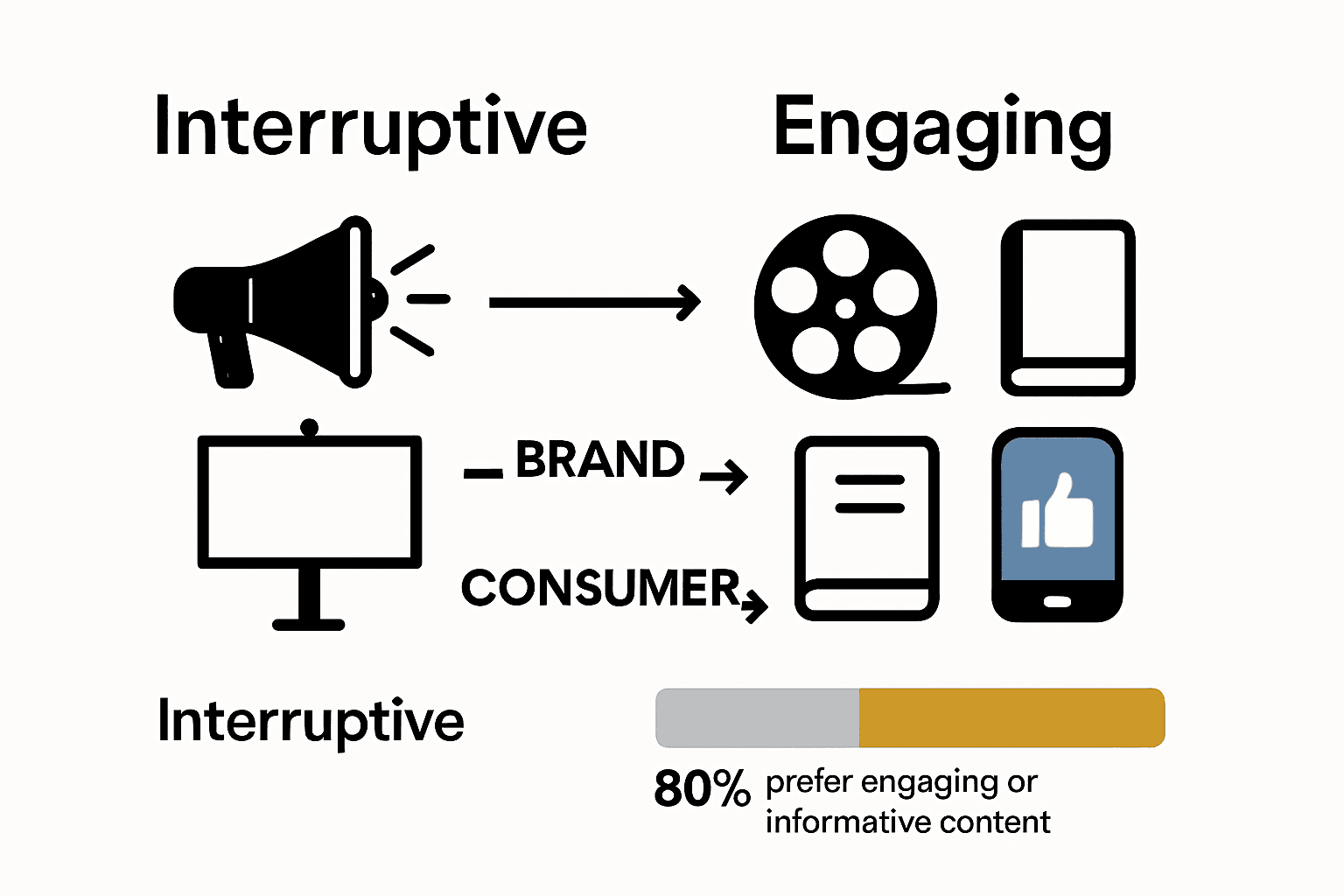
Most people still mix up branded content with typical ads, but the truth is far more interesting. Over 80 percent of consumers prefer content that entertains or informs rather than interrupts. For related strategies, see our video ads in ecommerce and ecommerce blog strategy guides. As brands get creative with storytelling and value-driven experiences, understanding what truly defines branded content matters more than ever. This article will clarify what branded content really means, clear up common myths, and reveal why it stands apart from traditional marketing.
Table of Contents
- Branded Content Defined And Common Misconceptions
- Types Of Branded Content And Key Distinctions
- How Branded Content Works For Digital Brands
- Essential Steps To Creating Effective Branded Content
- Benefits, Risks, And Mistakes To Avoid
Key Takeaways
| Point | Details |
|---|---|
| Branded content goes beyond traditional advertising | It focuses on storytelling and providing genuine value, aiming for audience engagement rather than direct sales. |
| Types of branded content vary significantly | Categories include narrative, educational, entertainment, user-generated, and documentary-style content, each serving unique purposes. |
| Digital brands leverage branded content for engagement | They create tailored, interactive narratives that foster ongoing consumer relationships and enhance the brand experience. |
| Careful execution is key to success | Brands must prioritize authenticity, transparency, and genuine audience value to avoid pitfalls and maintain trust. |
Branded Content Defined and Common Misconceptions
Branded content represents a sophisticated strategy where brands create entertainment or informative material designed to engage audiences while subtly promoting their identity and values. According to Routledge, this approach represents a "fateful merging of media and marketing" that goes far beyond traditional advertising.
Unlike straightforward product advertisements, branded content seeks to provide genuine value to consumers through storytelling, educational material, or entertainment. Wikipedia defines it as "entertainment funded by advertisers to build brand awareness" - but it's more nuanced than a simple definition suggests. The core objective is creating content that audiences want to consume voluntarily, rather than content they're forced to endure.
Common misconceptions about branded content often emerge from misunderstanding its fundamental purpose. Many people incorrectly assume branded content is just another form of advertising. In reality, it's a sophisticated narrative approach that:
- Prioritizes audience engagement over direct sales pitches
- Provides genuine entertainment or educational value
- Builds long-term brand perception and emotional connection
- Differentiates itself from traditional product placement
The most successful branded content feels authentic, transparent, and aligned with both the brand's values and the audience's interests. It's not about interrupting consumer experiences but enhancing them through meaningful, relevant storytelling that just happens to be sponsored by a brand.
Types of Branded Content and Key Distinctions
Branded content has evolved into a multifaceted strategy with diverse approaches across different media platforms. According to Migration Letters, researchers have identified multiple categories of branded content based on production style, distribution channels, and content characteristics. These range from entertainment-driven narratives to more educational and informative formats.
Research from Taylor Francis highlights the extensive landscape of branded content, which spans various media including film, television, journalism, and digital platforms. The key distinctions emerge not just from the medium, but from the strategic intent and audience engagement approach.
Primary types of branded content can be categorized as:
- Narrative Branded Content: Story-driven pieces that embed brand messaging within compelling narratives
- Educational Content: Informative materials that provide genuine value while subtly showcasing brand expertise
- Entertainment Branded Content: Engaging media like short films, web series, or interactive experiences
- User-Generated Content: Campaigns that encourage audience participation and brand interaction
- Documentary-Style Content: In-depth explorations that connect brand values with broader societal narratives
The most effective branded content transcends traditional advertising by creating meaningful connections. It's not about explicit product promotion, but about crafting experiences that resonate with audiences, align with brand identity, and provide genuine entertainment or insight.
 Successful branded content feels less like a marketing tool and more like a valuable media experience that audiences choose to engage with voluntarily.
How Branded Content Works for Digital Brands
Digital brands have transformed marketing strategies by leveraging branded content as a powerful engagement tool. ORCA Research reveals that strategic branded content on social media can drive significant customer interaction by creating experiences that go beyond traditional advertising.
According to IOSR Journals, digital brands are increasingly blending entertainment and advertising to create compelling narratives that resonate with their target audience. This approach transforms marketing from a one-way communication model to an interactive, value-driven experience that customers actively seek out and engage with.
The mechanics of branded content for digital brands typically involve:
- Creating platform-specific content tailored to audience preferences
- Developing narratives that align with brand values and customer interests
- Utilizing interactive elements that encourage audience participation
- Producing high-quality, shareable content across multiple digital channels
- Measuring engagement through advanced analytics and audience feedback
Successful digital brands understand that branded content is not about direct selling, but about building long-term relationships. By providing genuine value, entertainment, or insight, they transform marketing from an interruption into an anticipated experience that audiences willingly consume and share.
The most effective branded content feels less like an advertisement and more like a valuable contribution to the audience's digital experience.
Essential Steps to Creating Effective Branded Content
Creating compelling branded content requires a strategic and nuanced approach that goes beyond traditional marketing techniques. IOSR Journals research emphasizes the critical importance of understanding your target audience and developing content that creates genuine emotional connections rather than simply pushing product messaging.
According to Taylor Francis, successful branded content development involves a comprehensive framework that encompasses strategic planning, thoughtful content creation, and intelligent distribution. The goal is to craft narratives that feel authentic and provide real value to your audience while subtly reflecting your brand's core identity and values.
The essential steps for creating effective branded content include:
- Audience Research: Deeply understand your target demographic's interests, pain points, and content consumption habits
- Story Development: Craft narratives that are engaging, emotionally resonant, and organically integrate brand messaging
- Value Proposition: Ensure your content provides genuine utility, entertainment, or insight beyond mere promotional intent
- Platform Optimization: Tailor content specifically to the strengths and audience expectations of each distribution channel
- Measurable Goals: Establish clear metrics for success that go beyond traditional marketing indicators
The most impactful branded content feels less like a marketing attempt and more like a meaningful contribution to the audience's knowledge, entertainment, or personal growth. By prioritizing storytelling, authenticity, and genuine audience value, brands can transform their content from interruption to anticipated experience.
Benefits, Risks, and Mistakes to Avoid
Routledge provides a comprehensive analysis of branded content, highlighting the delicate balance between potential benefits and inherent risks. Brands must navigate this landscape strategically, understanding that the line between effective storytelling and perceived manipulation is extremely thin.
According to Wikipedia, branded content offers significant advantages, particularly among younger demographics who value authentic, meaningful brand interactions. However, these benefits come with potential pitfalls that require careful consideration and sophisticated execution.
Key benefits of branded content include:
- Enhanced Brand Awareness: Creating memorable experiences that extend beyond traditional advertising
- Deeper Audience Engagement: Developing emotional connections through storytelling
- Increased Purchase Intent: Building trust and credibility through valuable content
- Improved Brand Perception: Positioning the brand as a thought leader or valuable content creator
- Cost-Effective Marketing: Generating organic reach and audience interaction
Common mistakes to avoid involve maintaining transparency, avoiding overly aggressive brand messaging, and ensuring the content genuinely provides value. Successful branded content feels like a gift to the audience, not a sales pitch. The most significant risk is losing audience trust by creating content that feels disingenuous or purely self-serving. Brands must consistently prioritize audience experience over direct promotional goals.
Unlock the Power of Branded Content with Branva
Creating authentic and engaging branded content can feel overwhelming when trying to connect with your target audience while avoiding the pitfalls of pushy advertising. This guide highlights the need to build true emotional connections through storytelling and platform-specific strategies — goals that every Shopify store owner shares.
The all-in-one marketing app Tilly is designed to help you craft meaningful branded content effortlessly. Whether you need AI-generated emails, social posts, or video ads, Tilly lets you manage everything from one place so you can focus on delivering genuine value to your audience.
Ready to transform your marketing from interruption to engagement? Start creating branded content that resonates today with Tilly. Don't wait — elevate your brand's story and watch your Shopify store thrive now.
Frequently Asked Questions
What is branded content?
Branded content is a marketing strategy where brands create engaging entertainment or informative material to subtly promote their identity and values, aiming to build long-term emotional connections with audiences rather than focusing solely on direct sales.
How does branded content differ from traditional advertising?
Branded content prioritizes audience engagement and provides genuine value through storytelling or educational material, unlike traditional advertising, which typically relies on direct sales pitches and interruption techniques.
What types of branded content exist?
Branded content can be categorized into several types, including narrative branded content, educational content, entertainment branded content, user-generated content, and documentary-style content, each focusing on different engagement techniques and mediums.
What steps are essential for creating effective branded content?
To create effective branded content, brands should conduct audience research, develop engaging narratives, ensure a strong value proposition, optimize for specific platforms, and establish measurable goals that emphasize audience experience over direct promotion.