Role of Automation in Ecommerce: Complete Guide
Nearly every american ecommerce business faces increasing pressure to work smarter, not just harder. With the rise of automation, companies are seeing new ways to cut manual tasks and boost personalized customer experiences. For putting it into practice on Shopify, see Shopify marketing automation: what to automate, what to approve, what to keep, how to grow Shopify sales with all-in-one marketing and 7 best Shopify marketing strategies. In fact, studies show automated systems can reduce repetitive workloads by over 30 percent. This guide gives you a clear look at what automation means today in online retail and how it helps modern stores stay efficient and competitive.
Table of Contents
- Defining Automation In Ecommerce Today
- Core Types Of Automation Solutions
- How Automation Transforms Store Operations
- Key Benefits For Shopify Store Owners
- Potential Challenges And Cost Factors
Key Takeaways
| Point | Details |
|---|---|
| Automation enhances efficiency | Implementing automation reduces manual effort, streamlining operations across ecommerce businesses. |
| AI-driven solutions personalize experiences | Advanced algorithms predict customer behavior, allowing for tailored product recommendations and dynamic pricing. |
| Strategic investment in technologies is essential | Successful automation requires careful planning and investment in infrastructure and training to navigate complexities. |
| Customer engagement is significantly improved | Automation tools facilitate personalized communication, enhancing customer interaction and satisfaction levels. |
Defining Automation in Ecommerce Today
Automation in ecommerce represents a strategic technological approach that transforms how online businesses operate, interact with customers, and optimize their digital workflows. Marketing automation has emerged as a critical component in modern digital commerce, enabling companies to streamline complex processes and deliver personalized customer experiences at scale.
According to research from jurnal.ubs-usg.ac.id, marketing automation encompasses a systematic approach to managing and improving digital business operations. This scholarly analysis highlights several key dimensions of automation in ecommerce:
- Reducing manual intervention in repetitive tasks
- Enhancing customer engagement through targeted interactions
- Implementing data-driven decision-making processes
- Increasing operational efficiency across multiple business channels
The contemporary landscape of ecommerce automation goes beyond simple task management. As explored in research from mdpi.com, artificial intelligence is rapidly transforming automation technologies. These advanced systems now integrate sophisticated algorithms that can predict customer behavior, personalize product recommendations, and dynamically adjust pricing strategies in real time.
At its core, ecommerce automation represents a powerful convergence of technology, data analytics, and strategic business intelligence.
By leveraging intelligent systems, businesses can create more responsive, efficient, and customer-centric digital experiences that adapt quickly to changing market demands.
Core Types of Automation Solutions
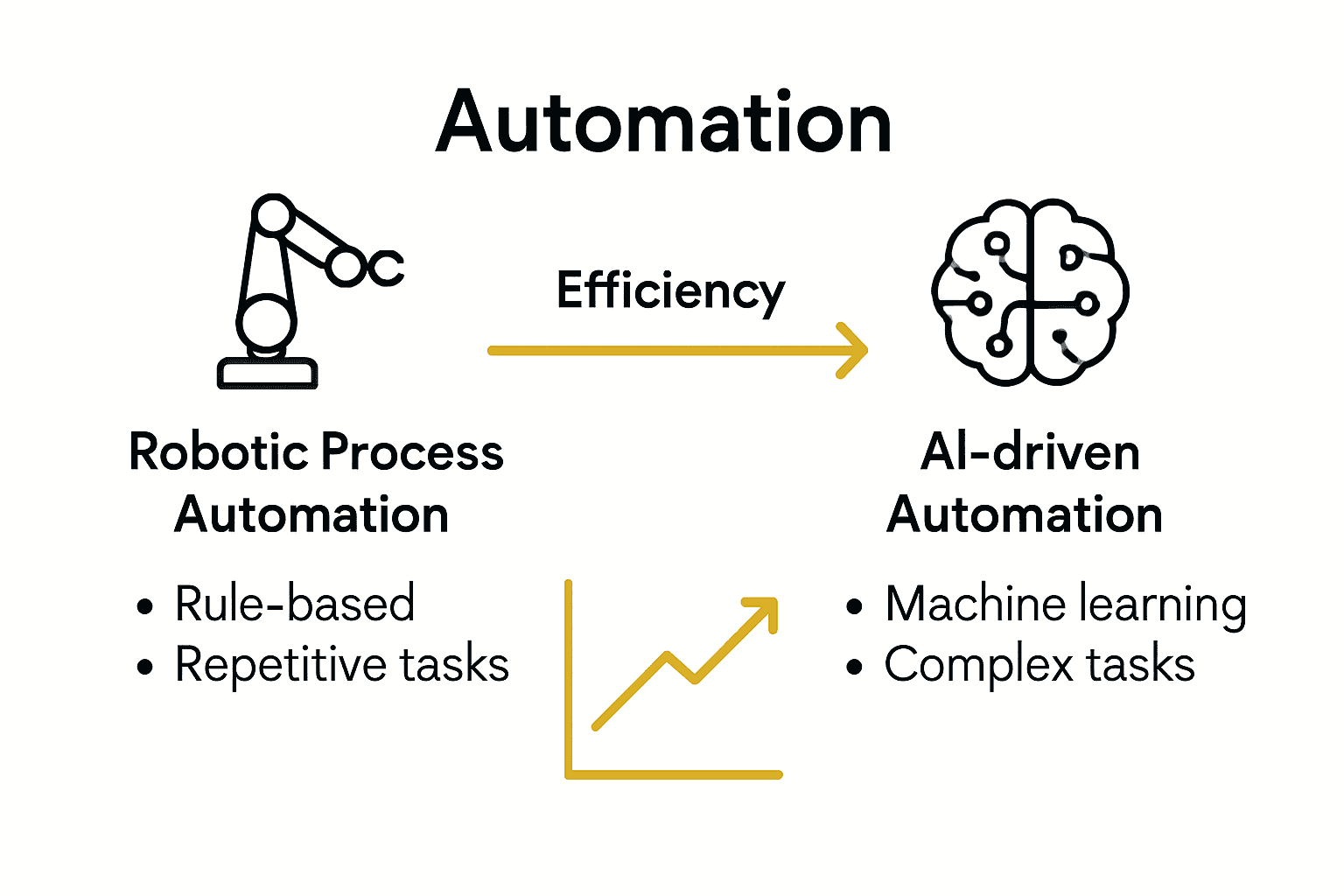
Ecommerce automation solutions have evolved into sophisticated systems designed to address various operational challenges and enhance business performance. Robotic Process Automation (RPA) and Artificial Intelligence (AI) driven solutions represent two primary categories of technological interventions that are reshaping digital business strategies.
According to research from mdpi.com, AI-driven recommendation systems have become increasingly complex and intelligent. These systems can be categorized into several critical automation solutions:
Customer Interaction Automation
- Chatbots and conversational interfaces
- Personalized email marketing campaigns
- Automated customer support systems
Operational Workflow Automation
- Inventory management systems
- Order processing and tracking
- Dynamic pricing strategies
As explored in documentation from Wikipedia, Robotic Process Automation represents a distinct approach to automation that focuses on mimicking human interactions with digital systems. RPA tools can handle repetitive tasks with high precision, reducing human error and increasing operational efficiency across multiple business domains.
Modern ecommerce automation solutions go beyond simple task execution. They integrate advanced machine learning algorithms that can analyze complex data patterns, predict customer behaviors, and make intelligent recommendations in real time. By combining predictive analytics, workflow optimization, and intelligent decision-making tools, businesses can create more responsive and adaptive digital ecosystems that continuously improve their operational performance.
How Automation Transforms Store Operations
Store operations represent the backbone of ecommerce performance, and automation is fundamentally reshaping how businesses manage their digital and physical commerce ecosystems. By integrating intelligent technologies, companies can create more responsive, efficient, and customer-centric operational models that dramatically reduce manual workloads and increase strategic decision-making capabilities.
Research from ijcem.in highlights several critical transformation areas where automation delivers substantial operational improvements:
Inventory Management
- Real-time stock tracking
- Automated reorder points
- Predictive demand forecasting
- Dynamic pricing adjustments
Customer Engagement
- Personalized recommendation engines
- Automated communication workflows
- Intelligent customer segmentation
- Proactive support systems
According to documentation from Wikipedia, logistics automation technologies are revolutionizing warehouse and distribution center operations. Advanced systems now integrate complex algorithms that can optimize picking routes, manage inventory placement, and streamline shipping processes with unprecedented precision.
Modern automation solutions go far beyond simple task replacement. They represent intelligent ecosystems that continuously learn, adapt, and optimize business processes. By leveraging machine learning, predictive analytics, and integrated workflow technologies, businesses can create more agile, responsive operational frameworks that dramatically improve efficiency, reduce operational costs, and enhance overall customer experiences.
Key Benefits for Shopify Store Owners
Automation technologies are transforming the landscape of digital commerce, offering Shopify store owners unprecedented opportunities to streamline operations, enhance customer experiences, and drive sustainable business growth. By implementing intelligent automation solutions, entrepreneurs can unlock significant competitive advantages that were previously accessible only to large enterprises.
According to research from jier.org, automation delivers substantial productivity enhancements across multiple business dimensions. The study highlights key benefits that directly impact store performance:
Operational Efficiency
- Reduced manual task processing time
- Minimized human error rates
- Consistent workflow management
- Faster order processing cycles
Cost Management
- Lower operational overhead
- Reduced labor expenses
- Optimized resource allocation
- Predictable business expenditures
Documentation from Wikipedia explores how intelligent automation combines artificial intelligence with robotic process automation to create sophisticated business ecosystems. For Shopify store owners, this translates into advanced capabilities such as intelligent customer segmentation, predictive inventory management, and personalized marketing campaigns that adapt in real time.
Modern automation solutions represent more than technological upgrades. They are strategic investments that empower store owners to focus on creative business development while intelligent systems handle complex operational tasks. By embracing these technologies, Shopify entrepreneurs can build more resilient, scalable, and customer-centric businesses that are prepared to compete effectively in an increasingly digital marketplace.

Potential Challenges and Cost Factors
Automation technologies represent significant investments that require careful strategic planning and comprehensive understanding of potential complexities. While transformative, these solutions come with nuanced challenges that businesses must navigate thoughtfully to maximize their technological implementations.
Research from academic.oup.com evaluates the intricate trade-offs between technological flexibility and automation, highlighting several critical considerations for businesses:
Financial Investments
- Initial implementation costs
- Software and hardware expenses
- Training and integration fees
- Ongoing maintenance expenditures
Technological Complexity
- Integration with existing systems
- Technical skill requirements
- Potential workflow disruptions
- Learning curve for staff adaptation
According to documentation from Wikipedia, robotic process automation introduces potential risks that extend beyond simple monetary considerations. These risks include potential innovation stagnation and the creation of intricate maintenance environments that demand specialized technical expertise.
Successful automation implementation requires a balanced approach that considers both technological capabilities and organizational readiness. Businesses must conduct thorough cost-benefit analyses, evaluate their technological infrastructure, and develop comprehensive change management strategies to mitigate potential challenges and maximize the transformative potential of automation technologies.
Unlock True Ecommerce Growth with Intelligent Automation
The article highlights how store owners face complex challenges like managing repetitive tasks, personalizing customer engagement, and optimizing inventory—all critical facets of efficient ecommerce automation. If you are struggling with reducing manual workloads or crafting timely marketing campaigns, you are not alone. Harnessing concepts like AI-driven recommendation systems and automated workflows can feel overwhelming but can deliver remarkable improvements in operational efficiency and customer satisfaction.
If you want the marketing side of this automated without losing control of what goes out, that's what Tilly is built for. It audits your store — products, pages, reviews and orders — and builds a brand profile with your voice, offers and customers. Eight agents then draft email flows, campaigns, blog posts, ads and page fixes. Every draft waits for your approval before it publishes to Klaviyo, your Shopify blog or Meta, and results are tied back to the exact piece that earned them. The free plan runs the audit and drafts without publishing anything; Tilly is on the Shopify App Store. For how to split the work between what runs on its own and what should wait for a yes, see Shopify marketing automation.
Frequently Asked Questions
How does ecommerce automation work?
Ecommerce automation works by connecting triggers (an order placed, a cart abandoned, inventory hitting zero) to actions (send an email, tag a customer, pause an ad) through rules or workflows. On Shopify, this runs through native tools like Shopify Flow, ESP automations like Klaviyo flows, and app-level workflows — each watching store events and executing the response without a human in the loop.
What is ecommerce automation?
Ecommerce automation refers to the use of technology to streamline operations, enhance customer interactions, and improve efficiency in online businesses. It encompasses various systems and processes that reduce manual intervention and enhance decision-making.
How does automation enhance customer engagement in ecommerce?
Automation enhances customer engagement by utilizing systems like chatbots, personalized email marketing, and automated support, which allow businesses to provide targeted interactions and responsive customer service, improving overall satisfaction.
What are the key benefits of using automation for Shopify store owners?
For Shopify store owners, automation offers several advantages including increased operational efficiency, reduced errors, and lower labor costs, enabling them to focus more on strategic growth and customer experience improvements.
What challenges might businesses face when implementing automation technologies?
Businesses may encounter several challenges such as high initial costs, the complexity of integrating new systems with existing infrastructure, and the need for staff training to adapt to new tools and processes.
What's a good marketing automation tool for a Shopify store?
For trigger-based emails, your email platform's flows — usually Klaviyo. For drafting the marketing itself — campaigns, blog posts, ads and page fixes — Tilly audits your store and drafts from your own products, reviews and orders, and nothing publishes until you approve it.